_01.jpg)
Trostianets
In the summer of 1864, a young composer named Pyotr Tchaikovsky settled into a villa in a quiet town on the Boromlya River and set to work on an overture called The Storm. He was not yet famous. Trostianets, in what is now Ukraine's Sumy Oblast, was the kind of place a promising talent went to think, an old Sloboda Ukraine settlement wrapped in pine and deciduous forest, with a strange neo-Gothic Round Yard already more than a century old at its center. The town had begun in the 1600s, populated by peasants and Cossacks migrating east after the crushing defeat of Ukrainian forces at Berestechko in 1651. By the time Tchaikovsky arrived, it was a landed estate, and it was about to acquire a very sweet second life.
The Sugar Baron's Town
In 1874, Trostianets passed into the hands of Leopold Koenig, one of the Russian Empire's great sugar producers, and the town's fortunes rose with his. Koenig and his son Julius, who owned the estate until 1917, invested in the place with an industrialist's ambition. Three years after Koenig bought it, the Smorodyne locomotive depot was built here on orders from the Minister of Railways, and a dozen steam engines were purchased to work the new line. The estate grew a manager's house so substantial it later became an architectural monument of national importance, and a rolling mill that ground the region's harvest. Around the aristocratic core clustered the buildings of a prospering provincial town, including the shop of the merchant Fyodor Kurylo, built in 1908, its handsome facade a small monument to the commercial confidence of the age.
A Round Yard and a Grotto of Nymphs
Trostianets guards a cluster of curiosities unusual for a town its size. The Round Yard, raised in 1749, is a circular neo-Gothic enclosure that looks more like a folly from an English park than anything you would expect on the Ukrainian forest-steppe. Nearby stands the late Baroque Church of the Annunciation, built between 1744 and 1750, and the eighteenth-century palace once held by the Golitsyn family, one of Russia's most storied noble houses. Strangest of all is the Grotto of the Nymphs, a romantic stone hideaway erected in 1809 to mark the centenary of the Battle of Poltava. Just outside town lies the Neskuchne tract, where three lakes lie scattered through mixed pine and deciduous woods, and an arboretum blurs so gently into the surrounding forest that it is hard to say where cultivation ends and wilderness begins.
The Scent of Chocolate
For much of the twentieth century and into the twenty-first, Trostianets has been, quite literally, a sweet-smelling town. Its best-known enterprise is the Ukraina chocolate factory, one of the leading confectioners in the country, its production lines turning out bars under names like Milka, Alpen Gold, and Korona. The plant, owned by Mondelez International, made Trostianets synonymous with chocolate across the region. The town's other pride is athletic: its stadium bears the name of Volodymyr Kuts, the Olympic distance-running champion born in a nearby village, whose two golds at the 1956 Games made him a hero far beyond Sumy Oblast. Between the confectioner's kettles and the runner's track, Trostianets built a modern identity that had little to do with sugar barons or wandering composers, yet somehow held them all in the same small map.
Occupied, Then Freed
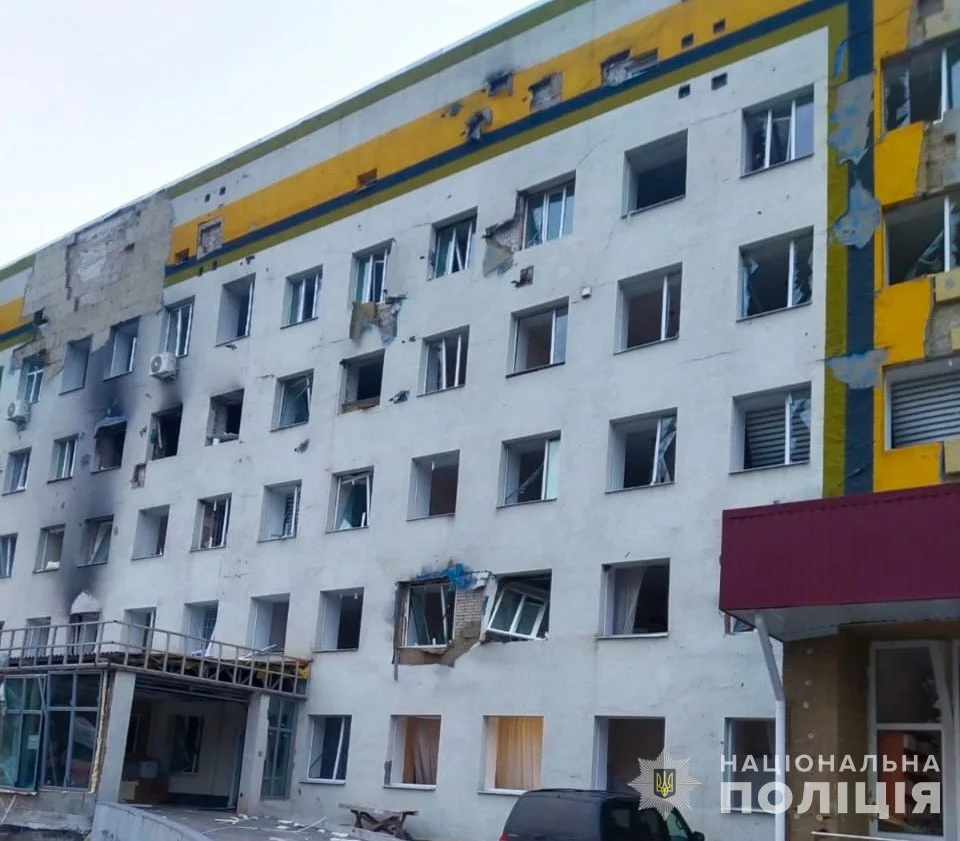
In the opening days of the 2022 invasion, Trostianets was captured and held under occupation for nearly a month, until Ukraine's 93rd Mechanized Brigade liberated it on March 26. The cost was severe. Many residents were killed, and journalists who reached the town afterward documented executions, torture, and looting. The chocolate factory was partly burned. The house of Koenig's estate manager, that national monument, was destroyed, and so was the very villa where Tchaikovsky had once composed The Storm, a small, particular loss inside a much larger one. Yet the town endured, as it had endured Cossack wars and world wars before. Its monuments are slowly being repaired and restored, and in recent years artists from several countries have gathered here for plein-air painting sessions, filling the former landowner's estate with new canvases of a town that refuses to be only a ruin.
From the Air
Trostianets sits at about 50.48 degrees north, 34.96 degrees east, on the Boromlya River roughly 59 km from Sumy in northeastern Ukraine. From the air, look for the forested Neskuchne tract with its three lakes just outside town and the compact urban grid along the river. The nearest major airport is Sumy (UKHS) to the north; the town lies on the N12 road linking Sumy and Poltava.
Nearby Stories
- Sumy 17 km away
- Hryhorii Skovoroda Literary Memorial Museum 23 km away
- Krasnokutskyi Arboretum 25 km away
- Treaty of Hadiach 37 km away
- Velyki Sorochyntsi 45 km away
- Central Black Earth Nature Reserve 66 km away
- Kharkiv Institute of Physics and Technology 72 km away
- Glinsk Hermitage 93 km away