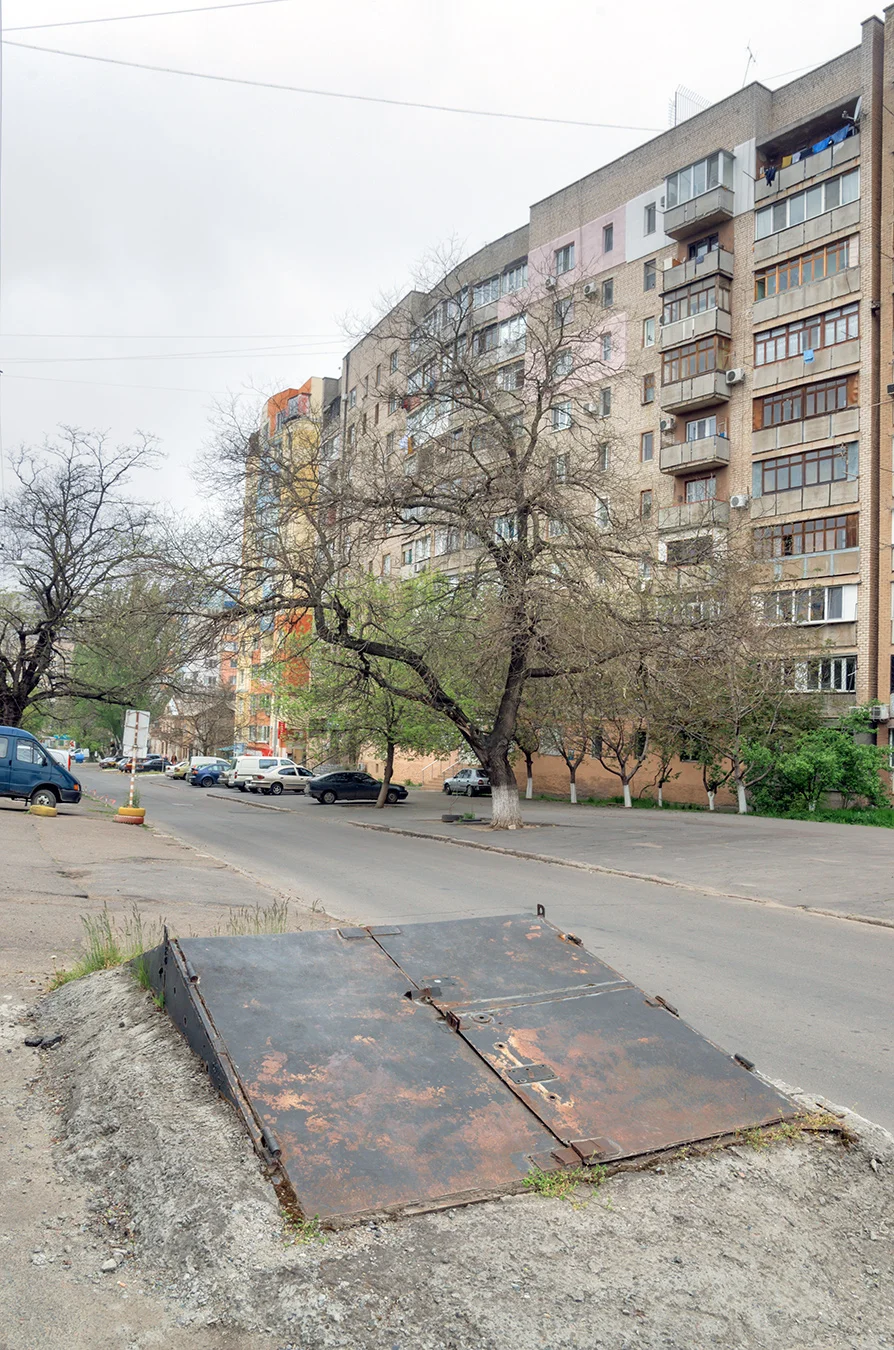

Odesa Catacombs
The city above was built from the darkness below. To raise Odesa's grand facades, nineteenth-century miners cut soft golden coquina limestone from the earth, and every block hauled up left a void behind it. Over generations those voids joined into something staggering: a labyrinth of tunnels estimated to run up to 2,500 kilometers, one of the largest underground networks on the planet, still not fully mapped after two centuries. More than 1,000 known entrances pierce the ground in and around the city. Descend through one, and you enter a world Odesa quite literally built itself out of.
Cut From the Stone of the City
The origin of the catacombs is refreshingly unromantic: they are mostly mines. Well over 90 percent of the network, by most estimates 95 to 97 percent, consists of former multilevel quarries where workers extracted the coquina stone that became Odesa's houses, churches, and palaces. The remainder is a patchwork of natural cavities and passages dug for other reasons, sewers, drains, and storm channels, woven together with basements and bunkers into a single sprawling maze. Because the tunnels were never planned as a whole, no one knows their true extent; the labyrinth has never been completely surveyed. Over the years, construction companies have packed many passages with earth, sand, or concrete, sealing them off for good. What remains is a vast, uneven honeycomb, part industrial relic, part accident of history.
Shelter and Battlefield
In wartime, the dark became a weapon and a haven. During the Siege of Odesa in 1941 and the occupation that followed, partisans took to the tunnels, using the maze that only locals could navigate to hide, strike, and survive against a far larger enemy. Their courage is remembered aboveground at the Museum of Partisan Glory in Nerubaiske, north of the city, where the single stretch of catacomb open to the public preserves the story of those who lived and fought below. Among the names honored is the young resistance fighter Yakov Gordienko. To crawl through even a sanctioned section is to feel the desperation and resolve of people who made a home in total blackness, cut off from sky and season, because it was safer than the world above.
Fossils, Rumors, and the Dark
The catacombs guard older secrets too. Their walls have yielded a lost menagerie from the Pliocene, some three to five million years old: the bones of an ancient camel, a distant relative of the elephant, three-toed horses, and the sabertooth cats Megantereon and Homotherium, the tunnels holding among the oldest known records of the latter. The maze breeds legends as readily as it preserves bones. The most infamous, the tale of a girl named Masha said to have died lost in the dark, was investigated and found to be a hoax, with no evidence she ever existed, a reminder of how easily the imagination fills an unmapped void. Only one small portion is safely open; the rest lures unsanctioned explorers into real danger. Beneath the sunlit boulevards, Odesa keeps its shadow, cool, silent, and endless.
From the Air
The public entrance near Nerubaiske lies at roughly 46.55 degrees N, 30.63 degrees E, northwest of central Odesa, though the tunnel network sprawls beneath the whole city and outskirts. The nearest airport is Odesa International (UKOO), about 10 km to the southeast. From the air there is little to see of the catacombs themselves; navigate by the city grid and Black Sea coast to the southeast, cruising at 2,000 to 3,000 feet in clear weather.
Nearby Stories
- Lower Dniester National Nature Park 9.3 km away
- Battle of Berezan (1788) 15 km away
- Moldavian Autonomous Soviet Socialist Republic 46 km away
- Black Sea Shipyard 57 km away
- Racecourse of Achilles 57 km away
- Tiraspol 87 km away
- Zaliznyi Port 119 km away
- Danube Delta 128 km away