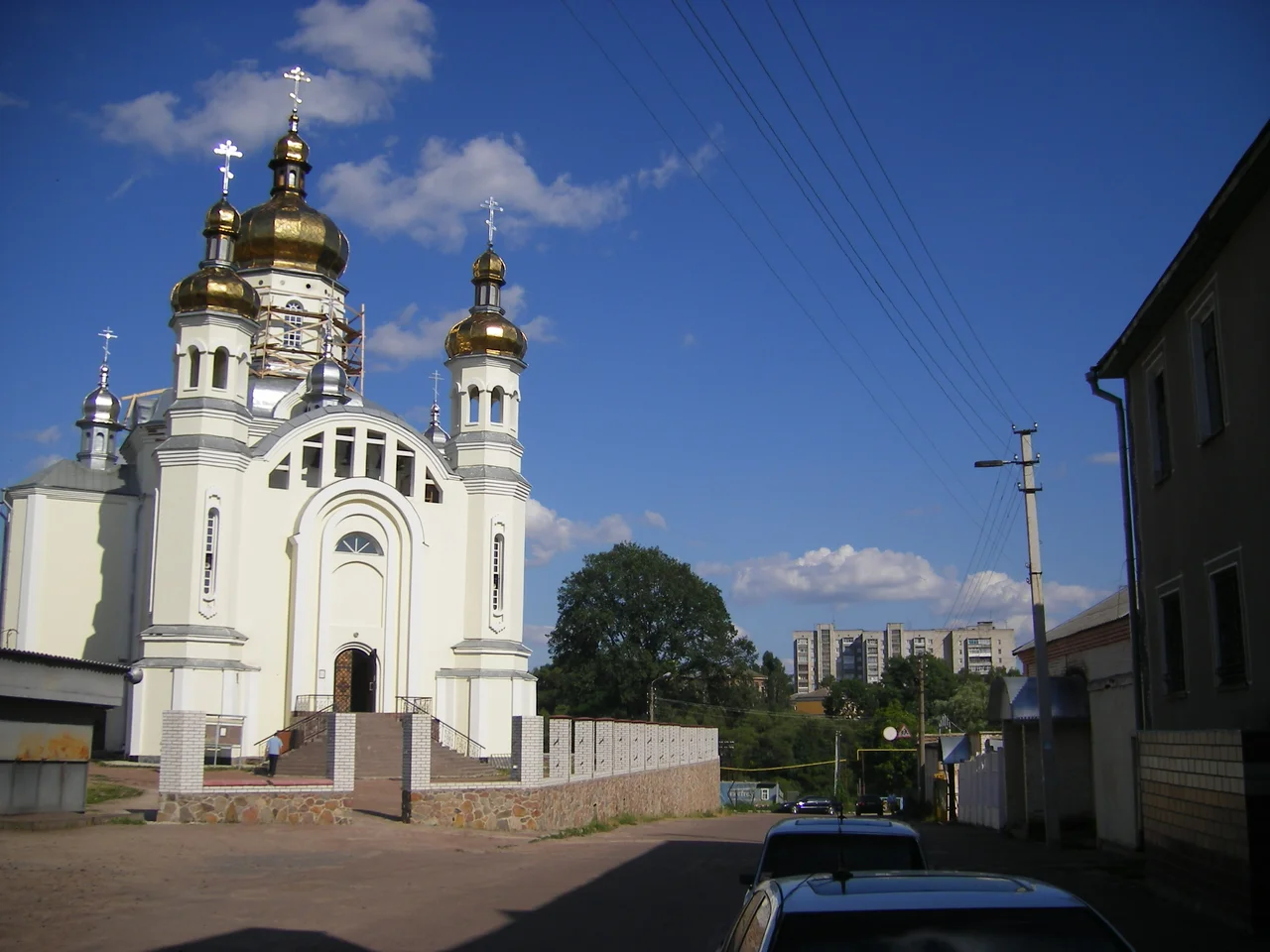

Korosten
The city's motto is a quiet act of defiance: it does not burn in a flame. That is a strange thing for a town to say about itself, until you learn how many times Korosten has been reduced to ash. Standing on the Uzh River in northern Ukraine, this old city carries one of the darkest and most famous tales in all of early Slavic history - a story of a grisly royal execution and a queen's terrible, ingenious revenge, set down in the medieval chronicles and painted for centuries afterward. Long before it became the busy railway junction it is today, Korosten was known as Iskorosten, capital of a fierce tribe called the Drevlians, and the stage for a reckoning no one who reads it forgets.
The Prince and the Bent Trees
In the year 945, Igor of Kiev, ruler of the Kievan Rus, came here to collect tribute from the Drevlians - and made the fatal mistake of coming back for more. The Primary Chronicle blames his own greed; he had already taxed them once that month and returned to demand a second payment. The Drevlians had had enough. According to the 10th-century Byzantine historian Leo the Deacon, they carried out a killing of almost mythic cruelty: they bent down two birch trees, tied the prince's legs to them, and let the trees spring upright, tearing his body apart. It is one of the most vivid death scenes in medieval literature, and it happened, by tradition, right here. The event would be depicted for centuries, including in the illuminated Radziwill Chronicle, whose image of the burning of Iskorosten still survives.
Olga's Sparrows
Igor's widow was Olga of Kiev, ruling as regent for their young son, and she did not forgive. Her revenge on the Drevlians is legendary. When her army besieged Iskorosten for a full year without success, she resorted to cunning. She offered the exhausted defenders peace and asked only a token tribute - three pigeons and three sparrows from each household. Relieved, the Drevlians agreed. But Olga, the chronicle says, tied burning tinder to each bird and released them. The birds flew home to the eaves and dovecotes of the city they had always nested in, and Iskorosten went up in flames from a thousand points at once. Whether legend or fact, the tale gave Korosten its identity - and eventually its motto. A city that burned by trickery came to insist, defiantly, that it does not burn in a flame.
Ashes and Rebuilding
Korosten's history since has often echoed that first fire. The Mongols under Batu Khan sacked the region in 1240. Cossacks stormed and leveled its fortifications during the Khmelnytsky Uprising in 1649. In the 20th century the city was devastated again in both world wars, and its Jewish community - nearly 11,000 people, more than a third of the population in 1939 - was destroyed in a series of Nazi killings in 1941, a loss that no rebuilding could restore. Yet the town kept returning. A railway arrived in 1902 and made it a vital junction; a porcelain factory came in 1909. Renamed from Iskorosten to Korosten in 1917, it grew into a real industrial city. The pattern of the old chronicle held: destruction, then stubborn renewal.
Pancakes on the Uzh
For all its heavy history, modern Korosten has claimed a decidedly lighter fame. Since 2008, the city has hosted an international potato pancakes festival each September in its riverside park - a wholehearted celebration of the humble deruny beloved across the Polissya region. The event even features a tongue-in-cheek potato pancakes triathlon, with contestants squatting under jugs heavy with pancakes and flinging them across five meters into bowls of sour cream. Visitors can attend a pancake school run by experienced cooks, and for a few hryvnias, any taster can buy a patent and join the jury judging the tastiest pancake of all. It is a festival built on generosity and good humor - a bright thread woven through a city that has known so much fire, still standing on its green banks above the Uzh.
From the Air
Korosten sits at roughly 50.95 N, 28.65 E in Zhytomyr Oblast, northern Ukraine, on the Uzh River. From the air, look for the river winding through the city park and the dense web of rail lines converging on the major junction that defines the town. A viewing altitude of 3,000-4,000 feet AGL shows both the urban core and the surrounding Polissya woodlands. The nearest major airport is Kyiv Zhuliany (UKKK) to the southeast; Kyiv Boryspil (UKBB) lies further east.
Nearby Stories
- Malyn 15 km away
- Radomysl Castle 17 km away
- Ovruch 22 km away
- Serhiy Pavlovych Korolyov Museum of Cosmonautics 41 km away
- Chernobyl Exclusion Zone 60 km away
- Olyka Castle 164 km away
- Nesvizh Castle 250 km away
- Lviv High Castle 303 km away