
ArcelorMittal Kryvyi Rih
The ground here is stitched with iron. That single fact explains almost everything about Kryvyi Rih - the long ridge in central Ukraine whose very name, the Crooked Horn, points to a landscape carved by ore. People have known the metal was down there since at least 1781, and by the end of the nineteenth century twenty mines were tearing more than a million tonnes of it from the earth every year. It was only a matter of time before someone built a furnace to match. What rose is not so much a factory as a small iron city: ArcelorMittal Kryvyi Rih, once called Kryvorizhstal, Ukraine's largest integrated steelworks.
Fire on the Steppe
The great works came out of the Soviet drive to industrialize. In 1931 Sergo Ordzhonikidze, who ran the USSR's economy, signed the decree that called the plant into being, and the foundation stone went down that same year. In August 1934 the first metal ran, and Kryvorizhstal was born. It grew with terrifying speed - blast furnaces multiplying, open-hearth furnaces roaring, a blooming mill able to work 1.7 million tonnes a year coming online in 1941, just before the war reached it. As German troops advanced, the plant was stripped and evacuated wholesale, its machinery and workers loaded onto trains bound for Nizhny Tagil, far east beyond the Ural Mountains. What could not be moved was left behind on the emptied steppe.
The Largest in Europe
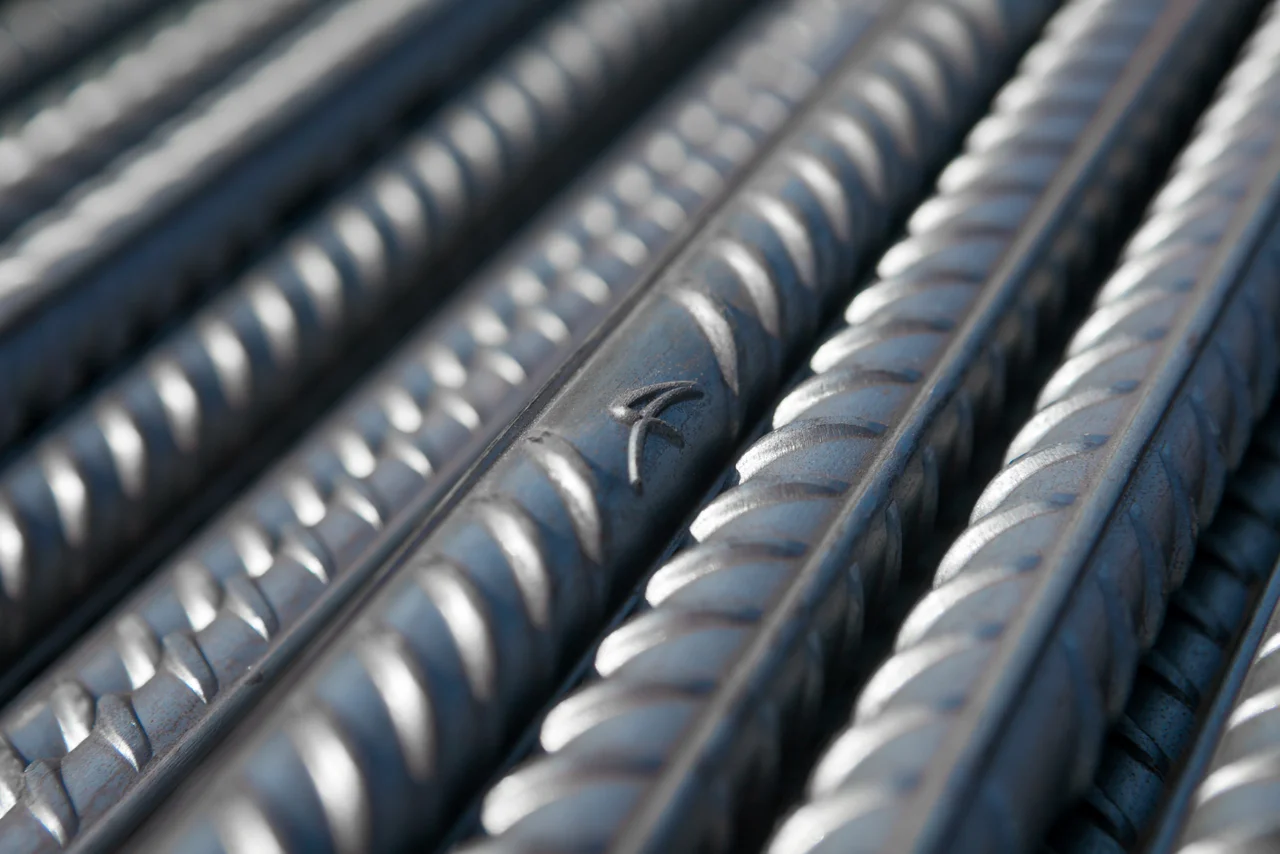
After the war the fires were relit and the plant resumed its relentless expansion. New blast furnaces followed one after another - number seven in 1962, number eight in 1970, the latter making the works the largest in all of Europe, and number nine in 1974. This was steel at continental scale: coke ovens, sinter shops, open pits gouged into the ore body, rolling mills turning out the rebar and wire rod that framed a thousand Soviet buildings. To work here was to live inside a landscape of heat and dust and ceaseless motion, where the horizon glowed at night and the metal never stopped moving from furnace to caster to mill. The plant did not simply sit in Kryvyi Rih. In many ways, it was Kryvyi Rih.
A Sale Watched Live
Independence brought upheaval of a subtler kind. In 2004 the state-owned plant was sold, at a low reserve price, to a politically connected consortium - even as higher foreign bids were turned away on technicalities. The deal drew fierce criticism at home and abroad as a case study in insider privatization. It was undone. The re-auction that followed in 2005 was broadcast live on Ukrainian television, the whole nation watching the bids climb, and the works passed to Mittal Steel. After Mittal merged with Arcelor, the plant took the name it carries now: ArcelorMittal Kryvyi Rih. Over the following years its owners poured billions into modernization, from rebuilt furnaces to new environmental controls meant to ease the load on the city breathing its smoke.
Keeping the Fires Lit
In February 2022 the full-scale Russian invasion of Ukraine reached into the works, freezing major projects and forcing the plant to keep only what it needed to avoid shutting down entirely. The human cost is the part that outweighs any furnace. By September 2024, more than three thousand of the plant's employees had joined Ukraine's armed forces, and 233 of them had been killed or gone missing - workers who left the mills and did not come home. Through it all, the plant has fought to keep running, a symbol as much as an enterprise. The iron is still in the ground where it has always been. And on the long ridge above it, against every pressure, the great furnaces of Kryvyi Rih burn on.
From the Air
ArcelorMittal Kryvyi Rih lies at 47.884N, 33.391E, at the southern end of the elongated city of Kryvyi Rih in central Ukraine. From altitude the site is unmistakable: a vast industrial sprawl of furnaces, chimneys, and enormous open-pit iron mines and tailing ponds stretching along the ore ridge. The nearest airport is Kryvyi Rih International (UKDR).
Nearby Stories
- Fortress of St. Elizabeth 49 km away
- Yelanets Steppe Nature Reserve 59 km away
- Battle of Zhovti Vody 63 km away
- Aeroflot Flight 3630 65 km away
- Kropyvnytskyi 75 km away
- Chortitza Colony 94 km away
- Admiral Makarov National University of Shipbuilding 117 km away
- Azov-Syvash National Nature Park 177 km away