.jpg)
Kepoi
The greatest orator Athens ever produced had a grandfather living in exile on the edge of the Scythian world, and the town he lived in was called, quite literally, "the Gardens." That is what Kepoi means in Greek. This modest colony sat on the Taman Peninsula just three kilometers east of the great city of Phanagoria, founded by settlers from Miletus in the sixth century BCE. It never rivaled its neighbors in size or fame, but through one banished Athenian it brushed against the story of Demosthenes himself, tying a small Black Sea farming town to the most celebrated voice in classical Greece.
A Gift for a Disgraced Athenian
The story comes to us, unkindly, from Aeschines, the great rival of Demosthenes, who dredged up the orator's family history to smear him in court. Demosthenes' grandfather, a man named Gylon, had been banished from Athens near the end of the Peloponnesian War, accused of betraying the nearby city of Nymphaeum to the enemy. Cast out of his homeland, Gylon found refuge under the kings of the Cimmerian Bosporus, who made him a present of "the Gardens," the town of Kepoi. There he settled and married, and his descendants would one day include the man whose speeches against Philip of Macedon gave the word "philippic" to the world. Aeschines meant the tale as an insult, hinting that Demosthenes carried barbarian blood from these distant shores. Instead it left a small colony forever linked to Athenian greatness.
Under the Kings of the Strait
Whatever its ties to famous men, Kepoi was above all a working Greek town on a busy trading coast. Through the Hellenistic centuries it fell under the control of the Bosporan Kingdom, the Greco-Scythian realm that dominated both shores of the strait and grew wealthy on grain, fish, and commerce with the steppe peoples. Kepoi shared in that prosperity, reaching its peak in the first centuries CE. Then came the great upheavals of the migration age. In the fourth century the Huns and Goths swept across this coast, and the town's long prosperity came to an end, one small light among many extinguished as the ancient order of the Black Sea crumbled and the cities of the strait fell silent.
The Goddess in the Ground
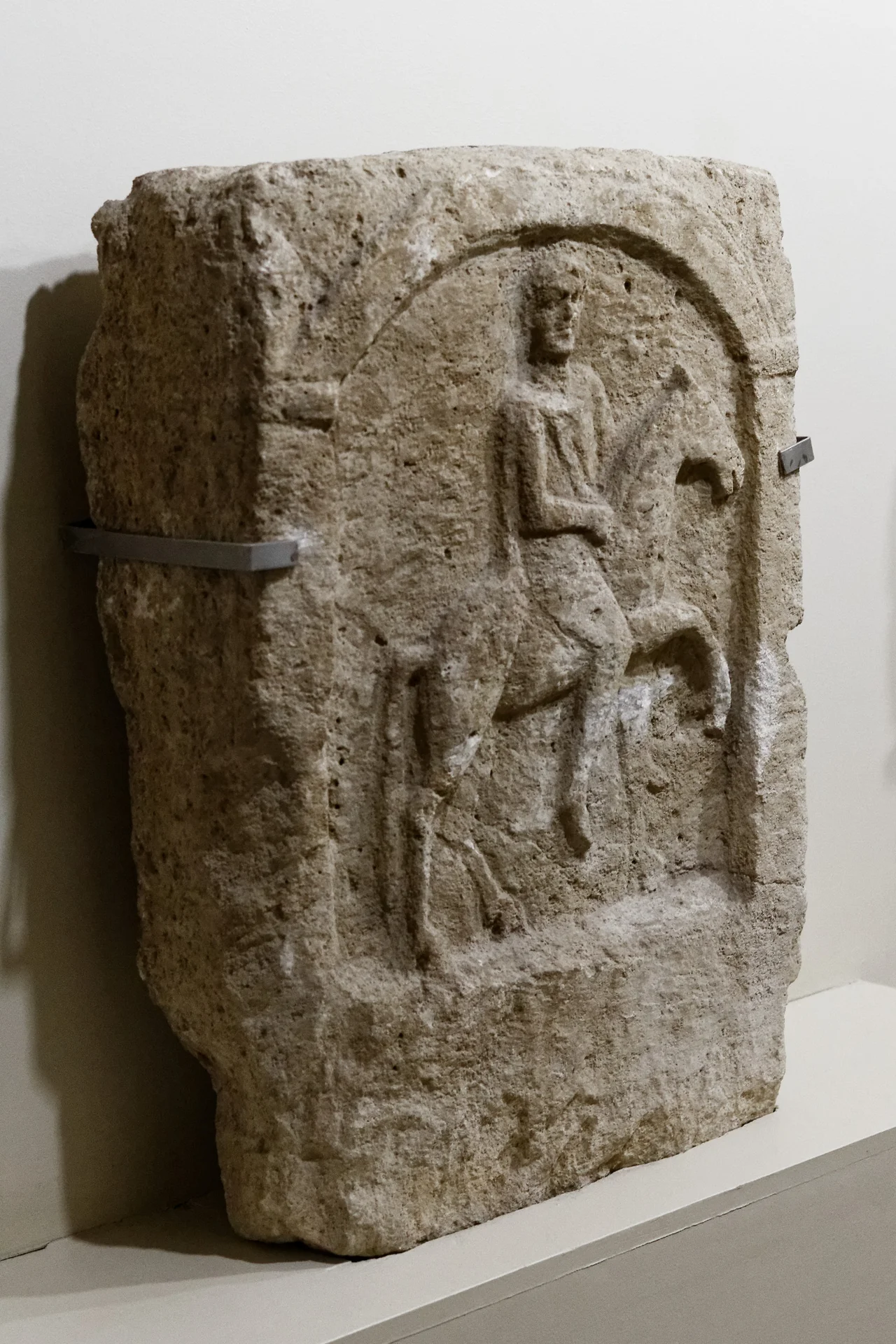
For centuries Kepoi lay forgotten, until Soviet archaeologists began digging in 1957 and the earth gave up its treasures. Among the finds was a marble statue of a Greek goddess so lovely it earned a name of its own, the Aphrodite of Taman. Through the 1960s and 1970s excavators explored more than four hundred burials, reading the lives and deaths of ordinary Bosporan Greeks in the graves they left behind. But the diggers are working against the sea. Much of the ancient town has already slipped beneath the waters of the Sea of Azov, its streets and houses drowned by a shifting coastline. What archaeologists can reach, they study; the rest lies underwater, a garden town half-returned to the sea that once carried its ships.
From the Air
Kepoi lies at 45.30°N, 36.99°E on the northern Taman Peninsula, on the shore of the Sea of Azov roughly three kilometers east of the ruins of Phanagoria. From the air, orient on the Sea of Azov to the north and the broad marshy peninsula; the site is low coastal ground, partly submerged, with no dramatic relief. Nearest airports are Anapa-Vityazevo (URKA) and Krasnodar (URKK) to the east.
Nearby Stories
- Tuzla Island 1.1 km away
- Battle of Kerch Strait (1790) 13 km away
- Soviet Cruiser Mikhail Kutuzov 34 km away
- Novorossiysk 62 km away
- Koktebel 104 km away
- Arabat Spit 123 km away
- Byriuchyi Island 168 km away
- Beriev 208 km away